
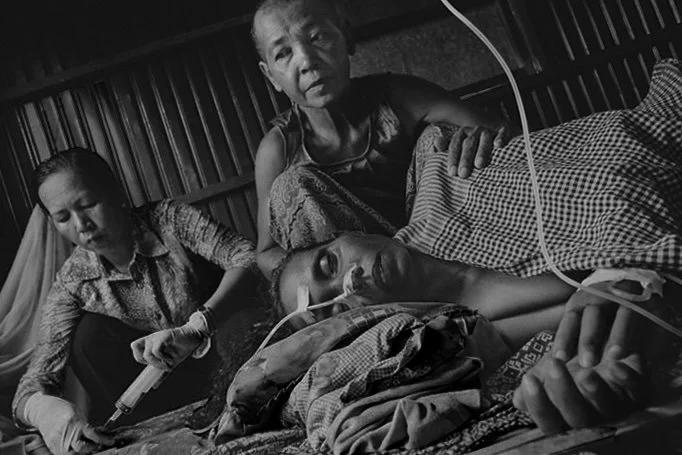
CHC health worker makes a home visit to provide HIV care to a young woman attended by her mother in her home in Svay Rieng, Cambodia. Photo by James Nachtwey 2005.
Initiating and Sustaining Life-Saving HIV Treatment in Rural Cambodia
In the early 2000s, AIDS was a death sentence in Cambodia. While lifesaving antiretroviral therapy (ART) had been available in the U.S. and Europe since 1996, it remained out of reach in Cambodia for nearly a decade more—even as HIV rapidly spread, and had teh highest level of HIV infection in southeast Asia..
CHC began screening all TB patients for HIV in Svay Rieng in 2003 with the support of amFAR and philanthropy having already launched HIV prevention programs in the villages of Svay Rieng and Kompot Provinces in the late 1990s.
Beginning in 2003, CHC offered HIV testing (with pre & post-test counseling) to all TB patients.
In 2003-2004, with support from Joe and Jeanne Sullivan, CHC brought the first HIV medications to rural Cambodia for 100 patients, using the community-based TB approach it had pioneered.
In 2004, CHC opened the HIV outpatient clinic at Svay Rieng Provincial Hospital in partnership with the Cambodian National AIDS Program, the first hospital to dispense HIV drugs in rural Cambodia.
In 2005, HIV treatment was expanded to rural Kompong Trach Hospital in Kompot Province, building on the infrastructure of CHC’s TB Program there.
Beginning in 2006, in Phnom Penh, CHC brought lifesaving HIV treatment and improved HIV and TB/HIV care to another 661 people living with HIV/AIDS and TB co-infection through the CAMELIA Trial and established Centers of Excellence for TB and HIV Care with French and Cambodian collaborators supported by the US NIH and the French AIDS Agency (ANRS) (see CAMELIA section below).
CHC’s Impact on HIV/AIDS: 2003–2026
Over 9,000 patients living with HIV/AIDS have been treated in the CHC rural HIV programs in Svay Rieng and Kompot between 2003-2024.
In 2026, CHC cared for 6,217 patients living with HIV/AIDS in collaboration with the Cambodian National AIDS Program (NCHADS). : 2,481 adults and children in the Svay Rieng and Kompot clinics (1,299 in Svay Rieng; 1,182 in Kompot), and 3,736 patients at Phnom Penh’s (NCHADS) HIV clinic.
CHC renovated the Pulmonary Ward at Khmer Soviet Friendship Hospital (KFSH) in Phnom Penh in 2006 and established HIV/TB care there—and later created the Sullivan Pediatric HIV Clinic at the hospital, which opened in 2009.
CHC was a leader of the CAMELIA trial, which proved that early treatment of HIV improves survival by 34% in TB/HIV co-infected patients. These results, published in the New England Journal of Medicine, shaped global WHO guidelines and have saved an estimated 150,000 lives per year worldwide since 2011 or +1 million lives (see below).
In 2003, CHC partnered with photojournalist James Nachtwey to document the humanitarian toll of TB/HIV. These images brought global attention to the crisis of TB/HIV co-infection & catalyzed scientific and clinical focus on TB/HIV (see below).
Initiating treatment for HIV and TB/HIV in rural Cambodia
Pheurn


Pheurn was the first patient to receive antiretroviral therapy in rural Cambodia in December 2003, shown with his wife (photo above left) and alone (middle photo) made possible by a donation from Jeanne and Joe Sullivan to provide HIV medications for 100 patients.
Pheurn who was in the CHC TB program, was screened for HIV by the CHC team during his TB treatment and was found to be HIV positive. Phuern began treatment for HIV with triple drug therapy according to national and international recommendations at the time and completed his TB treatment and was cured of TB.
Since 2003, Phoern has faithfully taken his HIV treatment for and was able to raise his family and work until his recent retirement at age 63. In the photo on the right, he is shown with 2 of his 7 grandchildren at his home in Svay Rieng, Cambodia on October 31, 2024. Photos and Pheurn’s story are shared with his permission.


Sarady


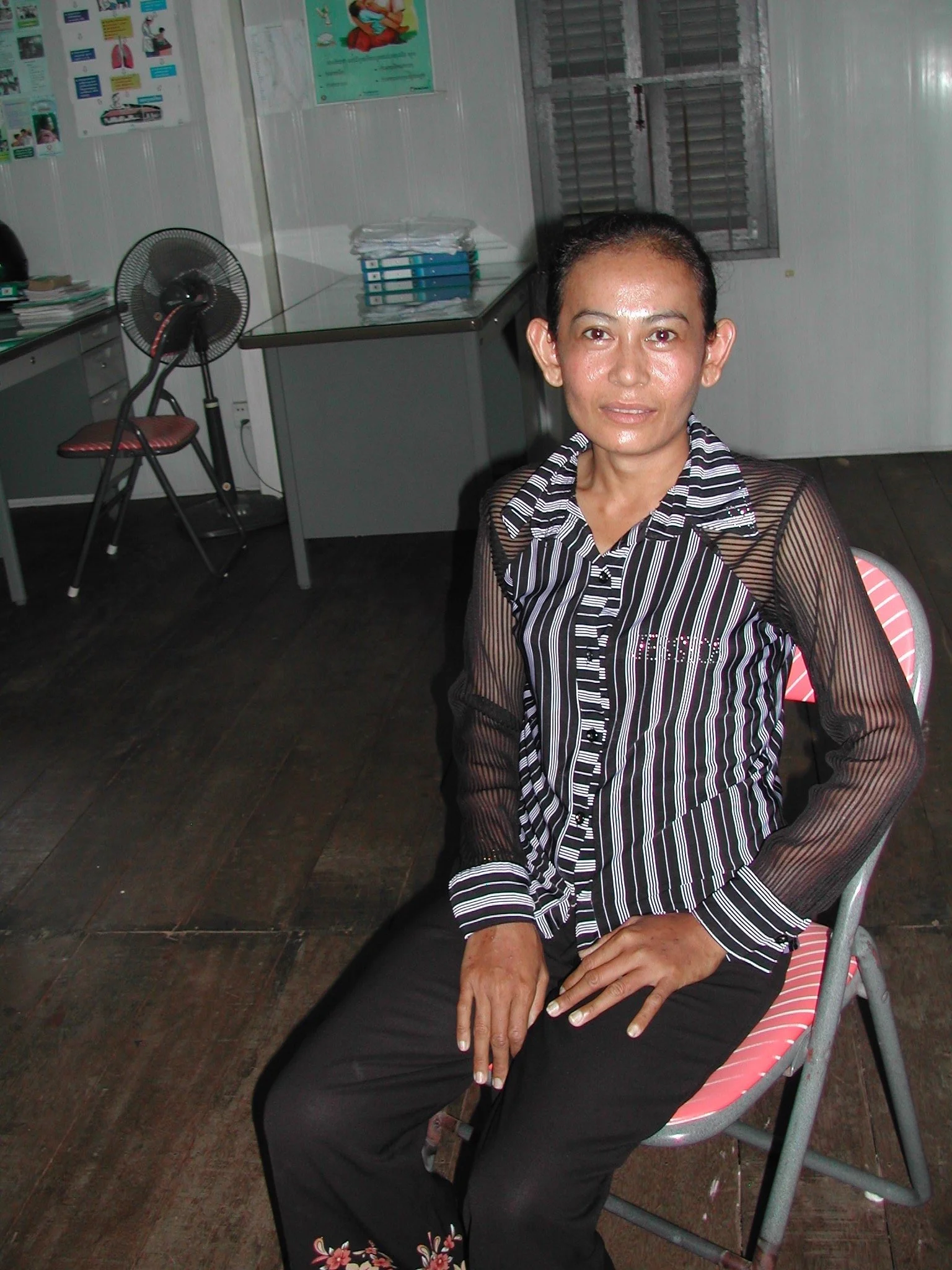
Sarady, pictured above (photo top row left) at age 33 in early 2003 asked to be tested for HIV. She said that she had lost her husband and her baby who both died due to AIDS the previous year. She was a neighbor of Dr. Sun Sath and knew CHC was to bring HIV drugs to Cambodia.
The blood test showed she was HIV positive. She said she had severe painful itching particularly on her legs and was found to have a skin condition called PPE (Painful Pruritic Eruption), which is a sign of advanced AIDS (middle row photos, middle and right) and impaired immunity. Dr. Didier Laureillard who was CHC Medical Coordinator in 2004 and later medical coordinator of the of the CAMELIA trial (see section below), is seen in the photo examining Sarady (middle photo). Sarady’s blood test confirmed her low CD4+T cells and immunosuppression.
On January 24, 2004, Sarady started triple drug HIV treatment with the according to international and national recommendations at the time making her the second patient in rural Cambodia to receive treatment. In parallel, CHC worked with the National AIDS program to establish HIV care and the HIV/AIDS clinic at Svay Rieng Hospital.
Photo to the left shows Sarady,now 55 years old, on Oct. 31, 2024 with Dr. Sun Sath her long time physician. Sun Sath is CHC’s Manager of the Svay Rieng HIV Clinic and was previously the head of CHC’s TB program in Svay Rieng. Sath is a graduate of the American Refugee Committee’s Medic Training Program on the Thai-Cambodian Border in the 1980s when he was living in a refugee camp on the Thai-Cambodian border. He has been working with CHC since its founding in 1994.
Sarady, recently retired from her work as a secretary, as of October 2025 volunteers at the Buddhist Temple in Svay Rieng. She has been faithfully taking her medications and feels well. Photos and Sarady’s story are shared with her permission.
Visiting the Svay Rieng Hospital HIV Clinic with Dr. Sun Sath and Dr. Sam Sophan on October 30th, 2024:


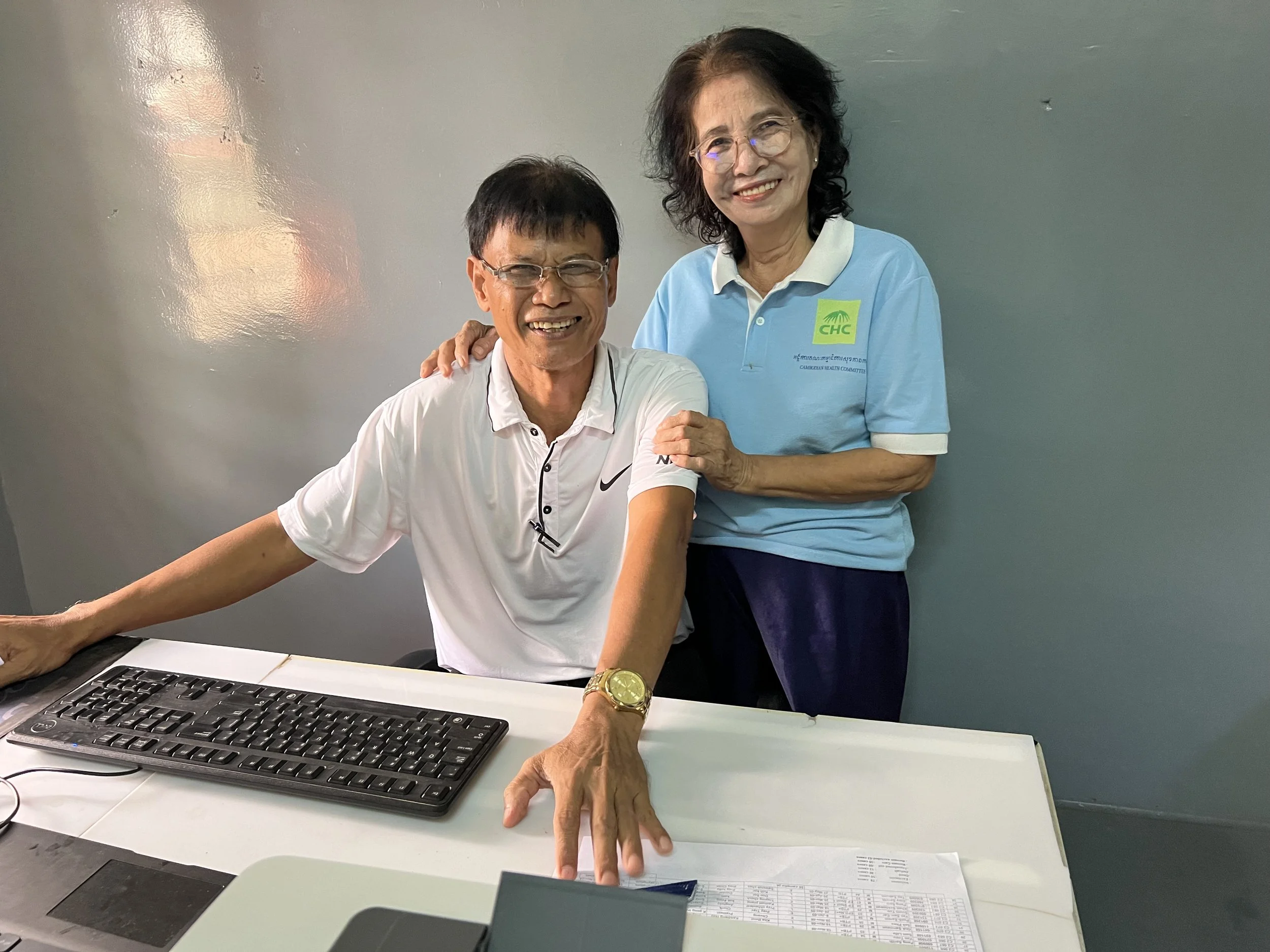
Svay Rieng HIV Clinic on October 30, 2024: Photo upper left: Dr. Sun Sath seated and Dr. Sam Sophan (standing) evaluate a new patient in the HIV clinic at Svay Rieng Provincial Hospital who has just learned that he is HIV positive. Upper Right: After evaluation with the physician, patients undergo blood tests to monitor their response to the HIV medication (above photo right). Lower Left: Patients then meet with the medical counselor to go over their medications and discuss any issues regarding adherence with the treatment and drugs that are needed to control their HIV. Lower Right:Meas Sina (seated) is the data manager for the CHC HIV and TB programs in Svay Rieng, and is an HIV medical counselor. Raksmeay (standing) is CHC’s longtime Program Administrator shown in Svay Rieng Hospital in October 2024. Both have been working with CHC in Svay Rieng since 1994.
A Match Made in Hell: TB and HIV
Tuberculosis (TB) is the leading cause of death among people living with HIV/AIDS. Although it is curable—even in advanced AIDS—TB has caused up to half of the 45 million AIDS-related deaths.
As HIV weakens the immune system, TB is more easily reactivated in those who may have been infected with TB decades before. TB can also be transmitted much easier to a person living with HIV/AIDS. TB aggressively spreads in someone with a weak immune system and the intense inflammation that TB causes also promotes HIV progression and AIDS. Yet with timely diagnosis and treatment, TB can be cured—even in the sickest patients.
While there is still no cure for HIV it can be successfully treated. TB is curable. Too many people with HIV die from TB, a disease we know how to cure with medications. CHC sought to change that.
The Pulmonary Ward at the Khmer-Soviet Friendship Hospital, the largest public hospital in Cambodia

In Cambodia’s capital city of Phnom Penh the ‘Pulmonary Ward’ of the Khmer Soviet Hospital was where patients very sick with AIDS and TB were sent in the early 2000s. The ward had few resources: there were no medications for HIV in 2001 in Cambodia, which is critical to survive TB and HIV co-infection.
Left photo: A 17 year old commercial sex worker with AIDS who was hospitalized on the Pulmonary Ward at the Khmer Soviet Friendship Hospital (KSFH) in 2001 with TB.
Orphaned and living with her aunt’s family, she had been sold into prostitution at the age of 12.
There were no HIV medications in Cambodia in 2001, and the Pulmonary Ward was poorly maintained with few medical services. The Maryknoll Missionaries were providing pain medications, social and food support, and helping to clean the ward.
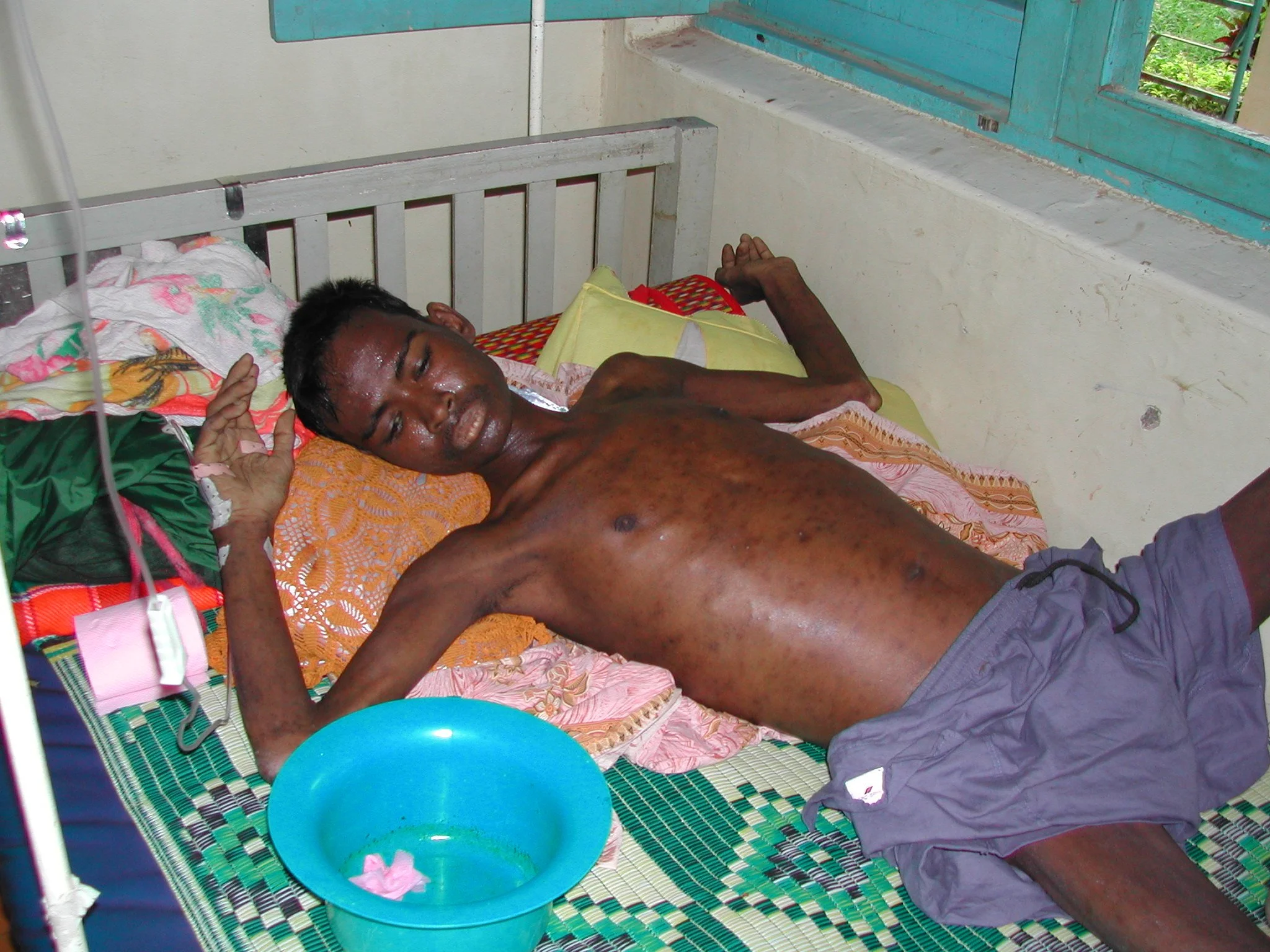
Above Photo: Chia Samuen, was 36 years old and severely ill with AIDS when this picture was taken of him on the Pulmonary Ward of Khmer Soviet Friendship Hospital in 2003. His wife, who was caring for him said that Chia Samuen, had been a very powerful and brave man who worked to demine landmines.
When the CHC Team met him at the Pulmonary Ward of the Khmer-Soviet Hospital he also had TB of the lungs and abdomen and a diffuse and very itchy skin condition associated with AIDS. While MSF (Medicines Sans Fronteires (Doctors Without Borders)-France had begun a pioneering HIV treatment program offering HIV/AIDS treatment in Phnom Penh, early-on they did not accept patients who also had TB, so Chia Samuen had been transferred to the Pulmonary Ward of the Khmer-Soviet Friendship Hospital.
Although he received TB treatment and blood transfusions he desperately needed, he died days after this picture was taken. Chia Samouen and his wife gave permission for his photo to be shown and his story to be shared.
HOW THE CAMELIA BROUGHT LOCAL ACCESS TO HIV TREATMENT WHILE IMPROVING HIV/TB CO-INFECTION SURVIVAL GLOBALLY
The CAMELIA (CAMBODIAN EARLY VS LATE INTRODUCTION OF ANTIVIRALS) TRIAL
To bring lifesaving HIV treatment to Cambodia, and to help provide large scale access to HIV and HIV/TB care in Cambodia, CHC turned to science and the US NIH and the French ANRS.
Our goal was to provide general access to treatment for TB/HIV, including training of medical staff and improved infrastructure at the Pulmonary Ward at the largest public hospital in Cambodia, the Khmer Soviet Friendship Hospital.
In partnership with Cambodian, French, and U.S. researchers—supported by grants from the NIH, French AIDS Agency—and working closely with the Institut Pasteur du Cambodge—CHC co-led a clinical trial, asking a question with global stakes: What was the optimal time of starting HIV treatment during TB care? How could we save more lives?
At that time, the global norm and World Health Organization recommendation was to delay starting HIV treatment for 2 months after starting TB medicines, even though 20% of patients who had AIDS and TB, died while waiting.
At the same time, doing such a study would bring HIV treatment to each of the 661 participants who would be recruited to the trial, which was designed at a time when HIV treatment was not generally available in Cambodia.
CHC co-led a randomized trial clinical the team called called the CAMELIA for Cambodian Early vs Late Introduction of Antivirals. The trial proved that just by starting the AIDS drugs at 2 weeks after TB treatment started compared to the recommended delay of 2 months, survival was dramatically increased by 34%!
The CAMELIA results changed the World Health Organization’s guidelines to start AIDS treatment early. It is estimated to have saved over 150,000 lives globally each year, or +1 million lives since 2011. The results of the CAMELIA Trial were published in the New England Journal of Medicine.
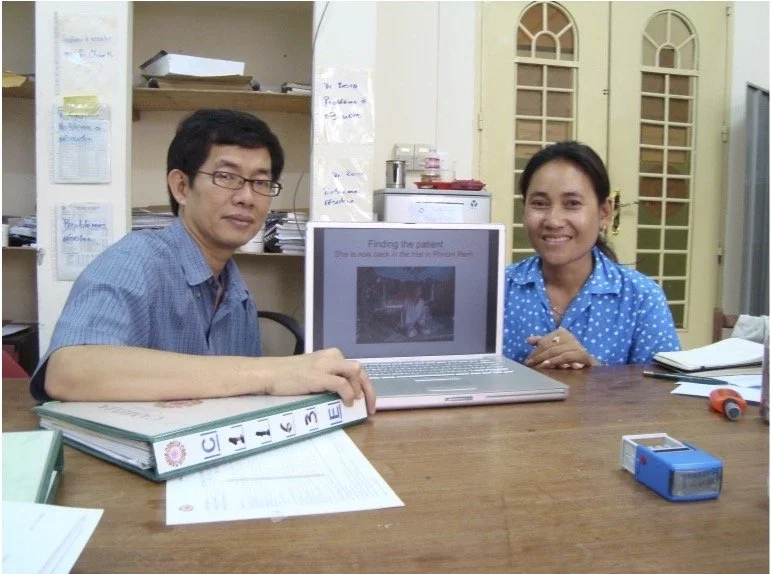
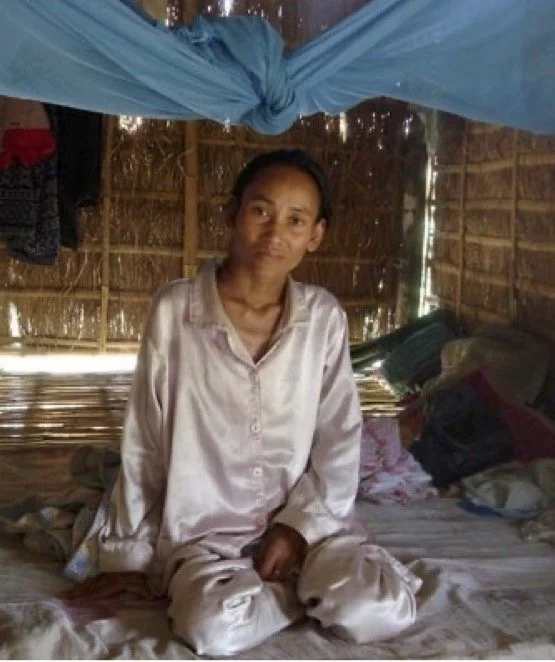
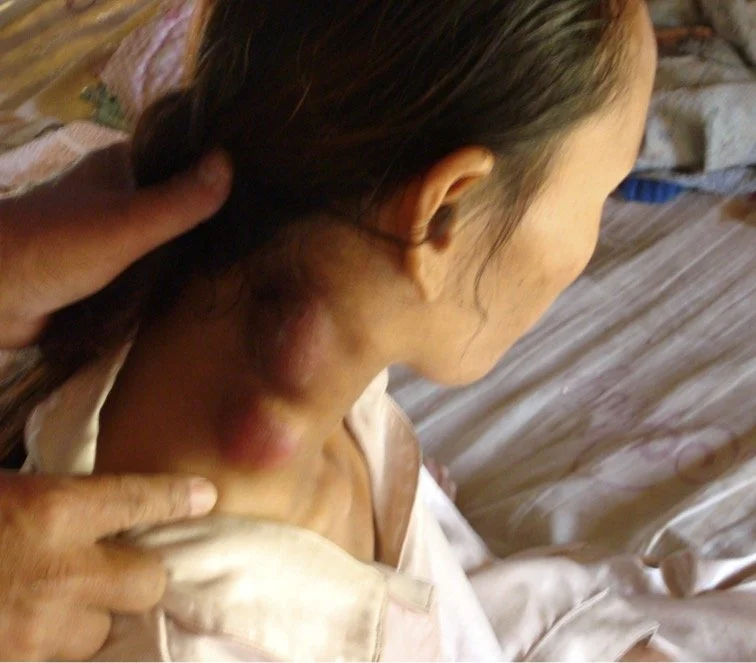
The 28 year old woman in the upper left photo was a participant in the CAMELIA trial. She had advanced AIDS and TB of the lung and of the lymph nodes of her neck (see upper right photo). After cure of her TB, and successful treatment of her HIV, she was hired to work for the CAMELIA trial as a patient supporter for new patients with HIV/TB on the Pulmonary Ward at the Khmer-Soviet Friendship Hospital. She is pictured above with Dr. Sarin Chan, who was a medical coordinator of the CAMELIA trial. Her health restored, she was feeling well on stable HIV medications and proudly displayed her picture shown in on the computer screen from when she was extremely ill.
Science in Service of Care
CHC had already made some important discoveries about immunity to TB in TB patients it had treated. Our team recognized the trial’s potential to unlock deeper scientific insight into why TB and HIV together are such a ‘match made in hell’ and caused so much death.
Working with Institut Pasteur (Cambodia and Paris) and Harvard Medical School, and funded by the Annenberg Foundation, John Moores, the U.S. NIH, and the French AIDS Agency (ANRS), CHC helped uncover how specific immune cells shape outcomes in TB/HIV patients—discoveries that guided new approaches to diagnosis, care, and treatment.
In addition, to during the course of conducting the CAMELIA trial, six Centers of Excellence for TB and HIV Care were stood up across Cambodia, including the Pulmonary Ward at the Khmer Soviet Friendship Hospital and the HIV service at Svay Rieng Provincial Hospital.
These Centers of Excellence not only delivered life-saving care to 661 patients during the trial, but also laid the foundation for training of doctors and nurses, improving HIV and TB/HIV treatment, and the roll-out of HIV treatment in Cambodia in general.
Together, these efforts brought cutting-edge medicine to patients who had been left behind—and ultimately, they reshaped global standards of HIV/TB care. The data generated by CHC and colleagues showing that early start of AIDS drugs significantly saves live led to WHO revising its recommendations for early HIV treatment in patients with TB. This is estimated to have save over a million lives since the new approach was adopted in 2011.


The CHC-renovated Pulmonary Ward at the Khmer Soviet Friendship Hospital
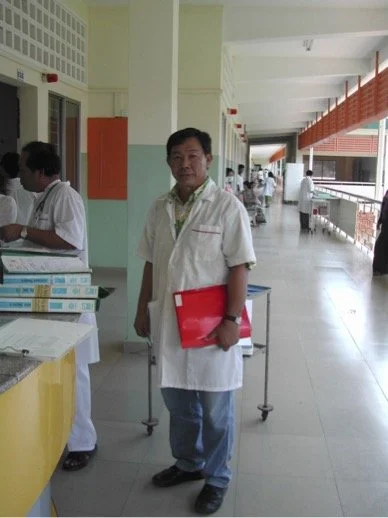
The Pulmonary Ward of the Khmer Soviet Friendship Hospital (KFSH) (photo below left) which served as the major clinical site of the CAMELIA trial. With support from the Japanese Embassy Grass Roots Fund, CHC renovated t he ward and it became a Center of Excellence for TB and HIV Care and Research Cambodia and a teaching ward for Cambodian medical students, nurses, and residents-in-training for TB, HIV/AIDS, and TB/HIV co-infection. Chouet Sarun, the CHC manager of the Pulmonary Ward at KFSH during the CAMELIA trial (2006-2010) is pictured on the renovated ward (right). A photo of the cleaned ward before renovation is also shown (lower left). A mother cares for her daughter suffering from advanced AIDS and TB on the newly renovated Pulmonary Ward - - the daughter was a participant in the CAMELIA trial (bottom right).
Showing the toll of TB/HIV to raise awareness and find effective solutions
TB is the leading cause of death among people living with HIV, responsible for up to half of all AIDS deaths since the start of the pandemic. To raise global awareness of this fact and to push for access to life-saving TB, DR-TB, and HIV treatments, CHC partnered with Time Magazine war photographer James Nachtwey.
Beginning in 2003, we sought to document and make visible the human toll of TB and AIDS in Cambodia. The collaboration led to publication of Nachtwey’s photos showing the human face of TB, DR-TB and AIDS twice in Time Magazine, and to their display in major exhibits at the United Nations (New York),Le Laboratoire (Paris), the Max Planck Institute (Berlin), the Gates Grand Challenge Conference (Bangkok), the U.S. Capitol, and for Nachtwey’s TED Prize. Nachtwey won ‘Photographer of the Year’ for his photo essay entitled ‘Defying the Dynamic of Neglect-TB in Cambodia’.
Together these efforts elevated the public and scientific consciousness of TB and HIV and TB/HIV co-infection as a humanitarian emergency.

Documenting the humanitarian emergency of TB and AIDS with war photographer James Nachtwey. Above, Jim is photographing a CHC visit to the home of a patient with TB and HIV in Svay Rieng.
In parallel, CHC helped initiate the first combined TB/HIV sessions at the International AIDS Society Meeting (2004), which are still ongoing and the TB/HIV Keystone Symposium in Tanzania linked with the Gates Grand Challenges Meeting—all of which bridged previous gaps in the global scientific collaborative response to TB/HIV co-infection.
Together, these efforts highlighted the humanitarian emergency of TB and HIV and promoted collaboration between the TB and HIV fields for more effective care and research leading to new solutions.
Nachtwey has been a long term partner in documenting the humanitarian toll of TB and HIV with CHC and recently in January 2026 photographed CHC’s work to eradicate drug resistant TB in Cambodia.

CHC home visit of a patient with advanced AIDS and TB on treatment for both. Photo by James Nachtwey, Svay Rieng, Cambodia, 2005.